Capacity Building & Professional Services
We strengthen organizations and teams through training, advisory, systems development, and hands-on support — so improvements last beyond our engagement.
Sub-services
Training & Workshops
Professional Certifications
Organizational Development
Policy & Manual Development
Systems Strengthening
Coaching & Mentoring
Knowledge Management
Change Management Support
Our standard
Capacity building should be practical, participatory, and tied to real work — with training-needs assessments, tailored curricula, pre/post evaluations, and follow-up support.
Related services
Monitoring, Evaluation & Learning (MEL) · Research, Assessments & Studies
Further reading
Effective capacity building in Afghanistan starts from how teams actually work: field constraints, donor expectations, language needs, and the realities of program delivery. Our training is built around those realities — hands-on, applied, and designed to leave behind stronger systems, not just a set of slides.
Capacity building in Afghanistan: what’s included
Every engagement is scoped to your team’s needs. Our capacity building in Afghanistan typically delivers:
- Training needs assessment — a structured review of your team’s skills, systems, and gaps, so training targets what actually needs strengthening.
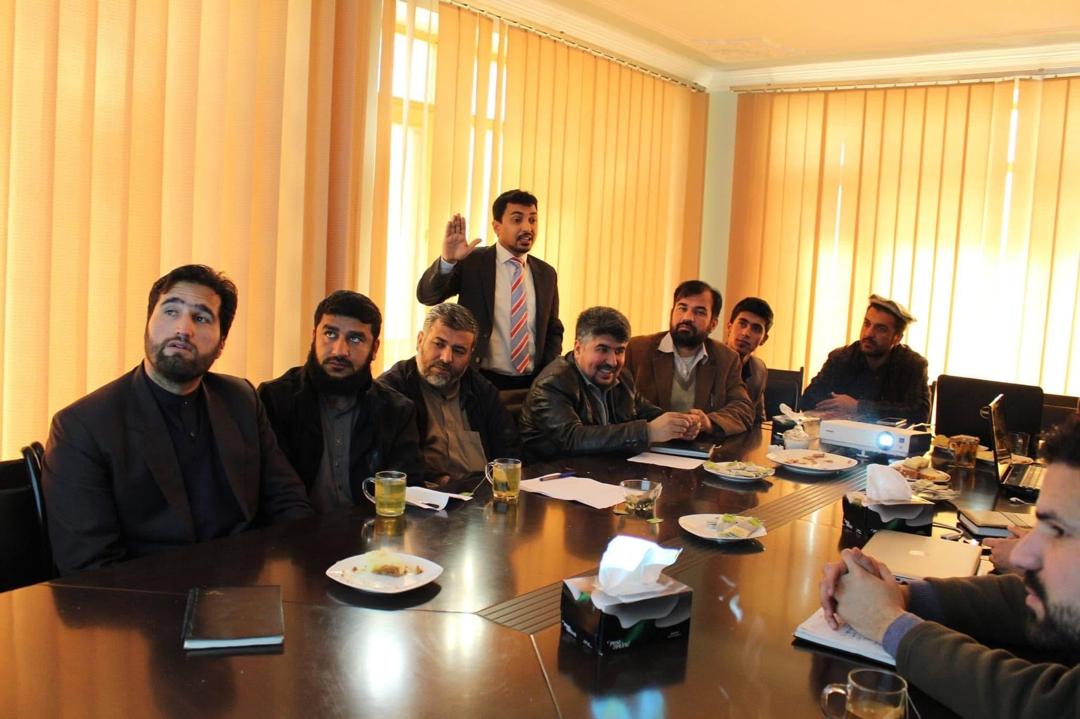
- Custom training workshops — practical, exercise-based sessions in Kabul, in the provinces, or remotely — in Dari, Pashto, or English.
- MEL training — indicators, results frameworks, monitoring plans, and learning loops, so staff can run credible monitoring themselves.
- Research training — research design, sampling, and ethical fieldwork for teams collecting their own primary data.
- Financial compliance training — donor rules, eligible costs, and documentation requirements that keep grants compliant.
- Data collection training — mobile data collection, GPS and photo evidence, and field protocols for reliable, verifiable fieldwork.
- Project management training — planning, budgeting, coordination, and reporting for project teams running operations on the ground.
- Organizational capacity development — organizational assessments, improvement plans, and follow-up coaching that strengthen systems beyond individual skills.
- Technical advisory services — short- or long-term expert support as your team applies new practices.
- Training materials and toolkits — templates, checklists, SOPs, and reference guides your team keeps and reuses.
- Learning measurement — pre- and post-training competency assessments that show what changed, reported back to you in clear terms.
Our approach
Start from your actual gaps
We begin with a training needs assessment: interviews, skill reviews, and a look at your current tools and procedures. Training is designed around the gaps that matter to your work — not a standard syllabus.
Build it around your context
Curriculum, examples, and exercises are drawn from Afghan program environments: donor reporting formats you actually use, field tools your staff actually carry, and constraints they actually face. Generic content doesn’t survive contact with the field.
Learn by doing
Sessions are hands-on. Participants draft indicators, design sampling plans, practice mobile data collection, and work through real documentation scenarios — with facilitators who have done this work in Afghanistan’s operating environment. Practice and feedback replace lectures wherever possible.
Support the application
Training fails when staff return to their desks and nothing changes. We build in coaching, follow-up reviews, and advisory check-ins so new skills are actually applied — and we adjust where the friction points are.
Measure the learning
We assess competencies before and after training and report honestly: what improved, what needs more work, what comes next. We hold our own training to the same evidence standard we hold field data.
Who it’s for
Our NGO training in Afghanistan and broader capacity-building services are designed for organizations that need stronger teams and systems:
- National and international NGOs that need staff upskilling in MEL, research, financial compliance, or data collection — for a single project team or across an organization.
- UN agencies and donor-funded programs that require standardized training for implementing partners, or capacity support built into program delivery.
- Government counterparts and public institutions seeking to strengthen planning, monitoring, and reporting capacities.
- Private firms and contractors that need project management training in Kabul and the provinces — or technical advisory to institutionalize better practices.
- Organizations preparing for independent verification — teams that want stronger internal systems before monitoring, audits, or assessments put them to the test.
If your team is growing faster than its skills, or your systems haven’t kept pace with your funding, this service is built for you.
Frequently asked questions
Do you deliver training outside Kabul?
Yes. We deliver in-person workshops in Kabul and in the provinces where access and security conditions allow, plus remote and hybrid sessions for teams that can’t gather in one place. Our base is Kabul, but our training work is designed for country-wide reach.
Can training be customized to our team’s level and our donors’ rules?
That’s the default. We adapt content to your team’s starting point — from junior field staff to senior managers — and to the donor requirements, reporting formats, and compliance rules you work under.
How do you know the training actually worked?
Pre- and post-training competency assessments, reported back to you with remaining gaps and follow-up recommendations. We also build coaching into engagements so learning is applied on the job, where it counts.
Do you offer ongoing support, or just one-off workshops?
Both. Alongside standalone workshops, we provide coaching, mentoring, and short- or long-term technical advisory — expert support while your team implements new systems and practices.
Further reading: Financial management training in Afghanistan · Monitoring and evaluation services · Organizational capacity assessments
Discuss your capacity needs
Tell us what you need to verify, understand, or improve.