Technical Studies & Sector Assessments
We deliver technical studies and sector assessments that diagnose what works, what doesn’t, and where to invest — across infrastructure, agriculture, education, health, livelihoods, WASH, and more — with sector experts, clear methodology, and actionable recommendations.
Sub-services
Infrastructure Assessments
Value Chain Studies
Market & Sector Analyses
Feasibility Studies
Policy & Regulatory Reviews
Capacity Gap Analyses
Climate & Environment Studies
Regulatory & Governance Reviews
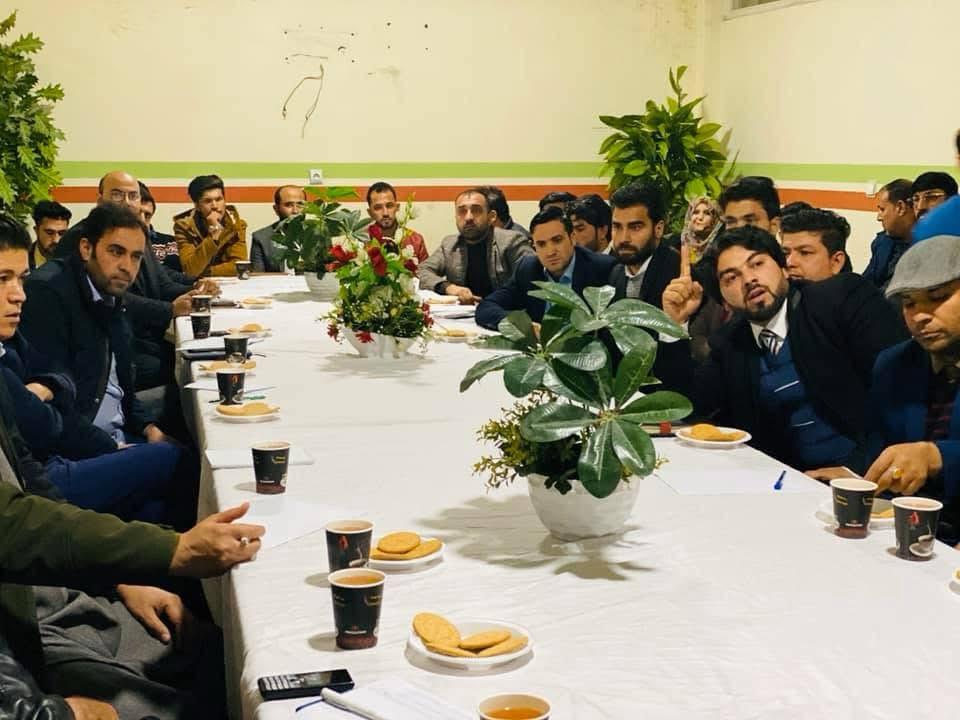
Our standard
Technical assessments should be practical, evidence-based, and grounded in the Afghan context — with clear methodology, field-verified findings, and recommendations you can implement.
Related services
Research, Assessments & Studies · Data Analytics, GIS & Digital Solutions · Monitoring, Evaluation & Learning (MEL)
In Afghanistan, investment and program decisions are too consequential to rest on assumptions. Our feasibility study Afghanistan practice provides independent, evidence-driven analysis that helps donors, investors, and organizations understand whether an idea is viable, a market is real, a sector is ready, and a community’s needs are correctly understood before resources are committed.
Our team conducts every feasibility study in Afghanistan with the same rigor we bring to all our work: clear questions, transparent methods, primary data collected across provinces, and findings written so a non-specialist decision-maker can act on them. A market assessment, a needs assessment, or a full baseline study can each stand alone — or form the foundation of a phased engagement that moves from evidence to design to implementation support.
Whether you are testing a commercial opportunity, designing a development program, or documenting the starting point against which future results will be measured, we deliver assessments that are honest about limitations, grounded in field realities, and built to withstand scrutiny.
Feasibility study Afghanistan: what’s included
Every engagement is scoped to the decision it must support. Typical deliverables include:
- Feasibility and viability analysis — technical feasibility, financial viability, operational requirements, and the risks and preconditions that must be managed.
- Market sizing and demand analysis — addressable demand, existing supply and competitors, pricing, distribution, and the regulatory and licensing environment shaping market entry.
- Sector profile reports — value chain actors, input and output markets, skills availability, infrastructure constraints, and policy direction for the sector in question.
- Needs assessment findings — documented unmet needs among the target population, triangulated across community voices, service providers, and administrative data, with attention to gender, displacement, and vulnerability.
- Baseline indicators — measurable starting-point indicators with clear definitions and data sources, so a baseline study Afghanistan donors commission today can be reused in future monitoring.
- Risk and scenario analysis — key risks (security, regulatory, currency, supply chain, partner) assessed across base-case and downside scenarios.
- Decision-ready recommendations — phased options and go/no-go findings tied to the evidence.
All reports are written in clear, plain English with executive summaries that stand on their own and annexes that show our working.
Our approach
Design and inception
We start by agreeing on the precise decision the assessment must support and the questions it must answer. That scoping shapes the methodology — sample design, interview targets, and the analytical framework — and is captured in an inception report before fieldwork begins.
Fieldwork and data collection
Primary data is the backbone of our work. Our Kabul-based team conducts key informant interviews, focus groups, market observations, and site visits across provinces. Where security or access limits a market assessment Afghanistan clients request, we say so explicitly and design around it with remote methods and secondary sources.
Analysis and validation
Data is cleaned, coded, and analyzed using reproducible methods. Quantitative findings are tested against administrative data and expert judgment; qualitative findings are triangulated across respondent types. Our sector assessment Afghanistan analysts validate conclusions with sector specialists so the analysis reflects how the industry actually works.
Reporting and decision support
The final report presents the evidence, its limitations, and the recommendations that follow from it. Where an engagement feeds later monitoring, the baseline study in Afghanistan we produce is designed from the outset to be re-measurable.
Quality and independence
Because we are an independent Afghan firm, our assessments are not advocacy documents. If the market is too small or the needs assessment Afghanistan evidence points to different priorities than the proposal assumed, we say so — with the evidence attached.
Who it’s for
- Donors and development agencies commissioning a sector assessment Afghanistan teams can use to inform strategy and design.
- Investors and companies needing an independent feasibility study in Afghanistan before committing capital.
- Government and public institutions requiring technical assessments of sectors, public services, or infrastructure pipelines.
- NGOs and UN agencies establishing baselines for new programs or validating design before scale-up.
- Banks and financial institutions seeking sector risk assessments for lending decisions.
Frequently asked questions
What is the difference between a feasibility study and a sector assessment?
A feasibility study tests whether a specific idea or investment will work — technically, financially, and operationally. A sector assessment examines the wider industry: who operates in it, how value flows through it, and what constrains or enables it. A feasibility study for an agribusiness investment, for example, would typically draw on a sector assessment of Afghan agriculture. Both are available independently.
Can you conduct fieldwork outside Kabul?
Yes, where access permits. Every assignment includes realistic access planning from the outset. Where direct access is not possible, we combine remote interviews, trusted local data collection, and secondary sources — and document which areas were covered by which method so the client can judge the evidence quality.
How long does a typical assessment take?
A focused market assessment can often be completed in four to six weeks; a multi-sector assessment or large-scale baseline study typically takes eight to twelve weeks. We provide a realistic schedule in the inception report and communicate immediately if fieldwork conditions change it.
Will you tell us if the project is not viable?
Yes — that is the point of an independent assessment. A credible negative finding from a feasibility study saves the client the cost of a failure.
Further reading: Research and assessment services · Data and GIS services · Monitoring and evaluation · How sector evidence supports Afghan SMEs
Discuss your technical study needs
Tell us what you need to verify, understand, or improve.